Sri Chennakeshava Temple is one of the most famous and beautiful ancient temples of India. It is located in Belur town of Hassan district, Karnataka. This temple is dedicated to Lord Chennakeshava, a form of Lord Vishnu. The temple was built in the year 1117 CE, which means it is more than 900 years old. It was constructed by the great Hoysala king Vishnuvardhana to celebrate his victory in war and his devotion to Lord Vishnu.
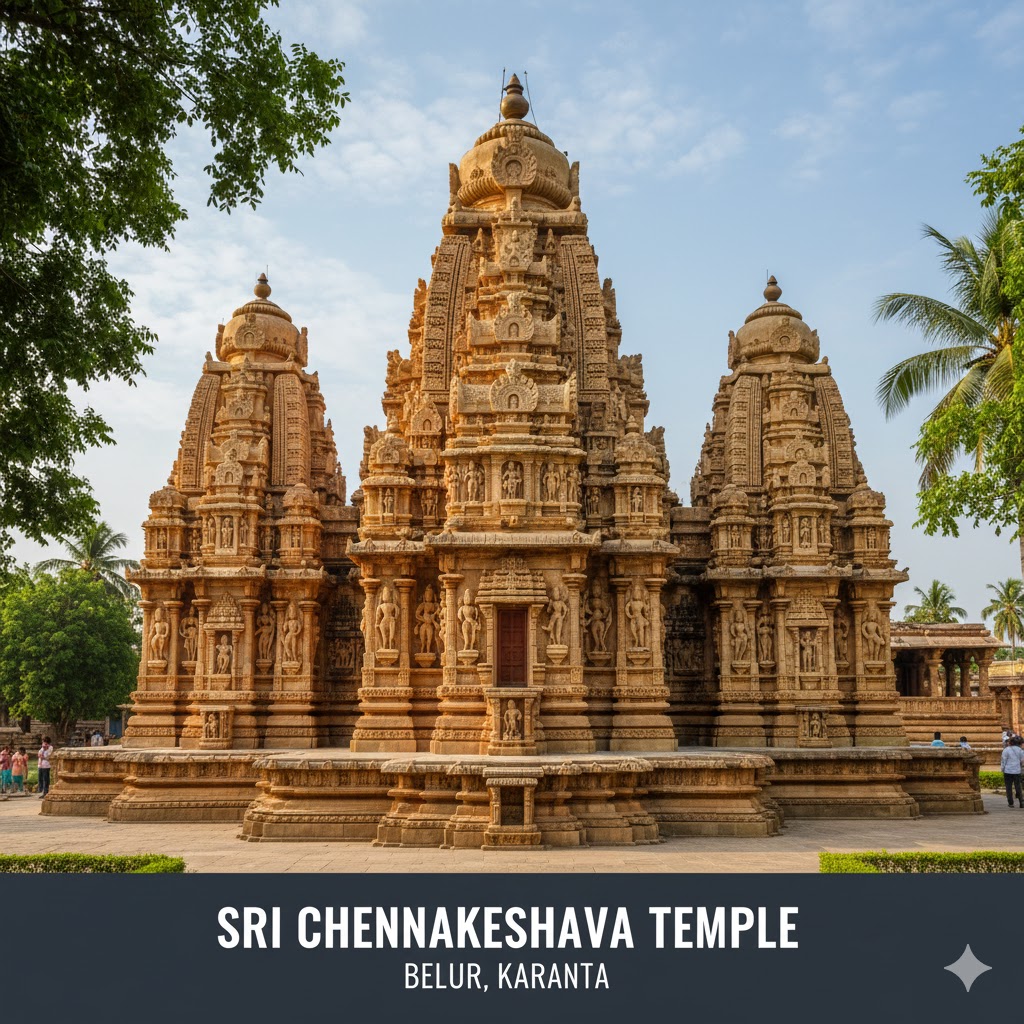
The temple is a fine example of Hoysala architecture, known for detailed stone carvings, sculptures, and artwork. The temple stands on a raised platform and is built using soapstone, which allowed artists to carve very fine designs. There are hundreds of carvings showing gods, goddesses, dancers, animals, and scenes from Hindu epics like Ramayana and Mahabharata. The temple complex covers a large area and attracts lakhs of visitors every year, including pilgrims, historians, and tourists.
Sri Chennakeshava Temple is also part of the UNESCO World Heritage Site (Hoysala Temples of Karnataka). The temple generally opens around 7:30 AM and closes around 6:30 PM. It is not only a place of worship but also a living museum of Indian art and culture.
Overview of Sri Chennakeshava Temple, Belur
| Feature | Details |
|---|---|
| Temple Name | Sri Chennakeshava Temple |
| Location | Belur, Hassan district, Karnataka |
| Deity | Lord Chennakeshava (Lord Vishnu) |
| Built Year | 1117 CE |
| Built By | King Vishnuvardhana |
| Architecture Style | Hoysala architecture |
| Building Material | Soapstone |
| Temple Age | Over 900 years |
| UNESCO Status | World Heritage Site |
| Opening Time | 7:30 AM |
| Closing Time | 6:30 PM |
| Nearest City | Hassan (38 km) |
Dress Code for Sri Chennakeshava Temple
A. Dress Code for Men
- Wear dhoti, panche, or formal pants with shirt
- Traditional Indian dress is preferred
- Avoid shorts, lungi above knee, and sleeveless vests
- Shirts should cover shoulders
- Simple and respectful clothing is advised
B. Dress Code for Women
- Wear saree, salwar kameez, or churidar
- Dupatta is recommended inside temple
- Avoid short dresses, jeans, and sleeveless tops
- Clothes should cover knees and shoulders
- Modest dressing is important
C. Dress Code for Kids
- Traditional clothes are encouraged
- Boys can wear kurta-pyjama or full pants
- Girls can wear frocks with full length or ethnic wear
- Avoid very short or sleeveless clothes
- Clean and decent dress is required
Sevas and Darshans at the Temple
Sri Chennakeshava Temple is an active place of worship where daily rituals and special poojas are performed. The main deity, Lord Chennakeshava, is worshipped with archana, abhishekam, and aarti. Devotees visit the temple to seek blessings for peace, prosperity, and good health. The temple follows traditional Vaishnava rituals.
Most sevas are simple and affordable so that every devotee can participate. Special poojas are conducted on Ekadashi, Vaikunta Ekadashi, and during major festivals. On important days, the deity is decorated with flowers and ornaments. The temple also allows devotees to offer coconuts, flowers, and prasadam.
During weekends and festival days, the temple can be crowded, but the darshan system is well organized. The calm atmosphere and beautiful surroundings make darshan a peaceful experience.
Table: Sevas and Darshans
| Seva / Darshan | Price (₹) | Timings | Description (10 words) |
|---|---|---|---|
| Archana | 50 | 8:00 AM – 6:00 PM | Chanting deity names with flower offering |
| Abhishekam | 200 | 9:00 AM – 11:00 AM | Sacred bath to Lord Chennakeshava |
| Alankara Pooja | 300 | 11:30 AM | Decoration worship with flowers and ornaments |
| Maha Aarti | Free | 12:00 PM & 6:00 PM | Lamp offering with devotional chants |
| Special Darshan | Free | Temple hours | Close view of main deity |
Temple Timings Table
| Activity | Time |
|---|---|
| Temple Opens | 7:30 AM |
| Morning Pooja | 8:00 AM |
| Abhishekam | 9:00 AM – 11:00 AM |
| Evening Aarti | 6:00 PM |
| Temple Closes | 6:30 PM |
History of Sri Chennakeshava Temple
Sri Chennakeshava Temple has a rich and well-documented history. The temple was built in 1117 CE by King Vishnuvardhana, one of the most powerful rulers of the Hoysala dynasty. The construction of the temple marked his military victory and also his religious transformation towards Vaishnavism.
The temple took several decades to complete. Many skilled sculptors worked on the temple, and their names are carved on some pillars, which is rare in ancient Indian temples. The temple walls display more than 600 detailed sculptures, showing gods, goddesses, dancers, animals, and stories from Hindu scriptures.
The Hoysala kings made Belur their capital, and this temple became the royal temple of the dynasty. Over the centuries, the temple survived wars, natural wear, and time. Today, it stands as a symbol of Karnataka’s rich heritage. Because of its historical and artistic value, it has been recognized as a UNESCO World Heritage Site, attracting scholars and tourists from across the world.
How to Reach Sri Chennakeshava Temple
Belur is well connected by road, rail, and air.
By Road:
Belur is about 38 km from Hassan, 220 km from Bengaluru, and 170 km from Mangaluru. KSRTC buses and private buses run regularly from these cities. Roads are good and suitable for cars and buses.
By Train:
The nearest major railway station is Hassan Railway Station, about 38 km away. From Hassan, buses and taxis are available to Belur.
By Air:
The nearest airport is Mangaluru International Airport, about 170 km away. Another option is Bengaluru Airport, around 235 km away.
Local Transport:
Auto-rickshaws, taxis, and local buses are available in Belur town. The temple is located in the center of the town and is easy to reach on foot from nearby areas.
Vrathams, Festivals and Celebrations
Sri Chennakeshava Temple celebrates many Vaishnava festivals with devotion. The most important festival is Vaikunta Ekadashi, when thousands of devotees visit the temple. Special poojas and decorations are done on this day.
Other important festivals include Janmashtami, Rama Navami, and Brahmotsavam. During Brahmotsavam, the deity is taken in a grand procession around the temple. Devotees also observe Ekadashi vratham, which involves fasting and prayer.
Important Festival Dates Table
| Festival | Month | Importance |
|---|---|---|
| Vaikunta Ekadashi | Dec – Jan | Most sacred Vaishnava festival |
| Janmashtami | Aug | Birth of Lord Krishna |
| Rama Navami | Mar – Apr | Birth of Lord Rama |
| Brahmotsavam | Varies | Annual grand temple festival |
Key Guidelines for Visitors
Visitors should maintain discipline and respect inside the temple premises. Dress modestly and follow the dress code. Footwear should be removed before entering the temple. Photography is not allowed inside the sanctum, but allowed in outer areas.
Maintain silence during darshan and poojas. Do not touch carvings or sculptures, as they are protected heritage structures. Avoid littering and keep the temple surroundings clean. Follow queue systems and instructions given by temple staff.
Elderly visitors and children should be careful while walking on stone floors, especially during rainy seasons. During festivals, arrive early as crowds can be large. Respect local customs and traditions. Donations and offerings should be made only at authorized counters. Following these guidelines ensures a peaceful and meaningful visit.
Contact Details of Sri Chennakeshava Temple
Sri Chennakeshava Temple is maintained by the Archaeological Survey of India (ASI) and local temple authorities. The temple office is located near the main entrance and provides information about poojas, timings, and festivals.
Visitors can directly visit the temple without prior booking for regular darshan. For festival details and special poojas, enquiries can be made at the temple office during working hours. Karnataka Tourism offices also provide guidance for tourists visiting Belur and nearby Hoysala temples like Halebidu. Local guides are available near the temple for historical explanations.
FAQs about Sri Chennakeshava Temple, Belur
- Who built Sri Chennakeshava Temple?
King Vishnuvardhana built it in 1117 CE. - Which god is worshipped here?
Lord Chennakeshava, a form of Lord Vishnu. - Where is the temple located?
Belur, Hassan district, Karnataka. - What is the temple famous for?
Hoysala architecture and stone carvings. - Is it a UNESCO site?
Yes, it is a UNESCO World Heritage Site. - What are the temple timings?
7:30 AM to 6:30 PM. - Is photography allowed?
Not inside the sanctum. - Is there a dress code?
Yes, modest traditional dress is required. - Which festival is most important here?
Vaikunta Ekadashi. - How far is Hassan from Belur?
About 38 km.