Sri Madhur Temple, formally known as Sri Madanantheshwara Siddhivinayaka Temple, is a well-known Hindu temple located near Kasaragod town in Kerala, India. It stands on the banks of the Mogral River (locally Madhuvahini), surrounded by paddy fields, hills and coconut groves. This serene setting gives the temple a spiritual and natural atmosphere that draws pilgrims and visitors throughout the year.
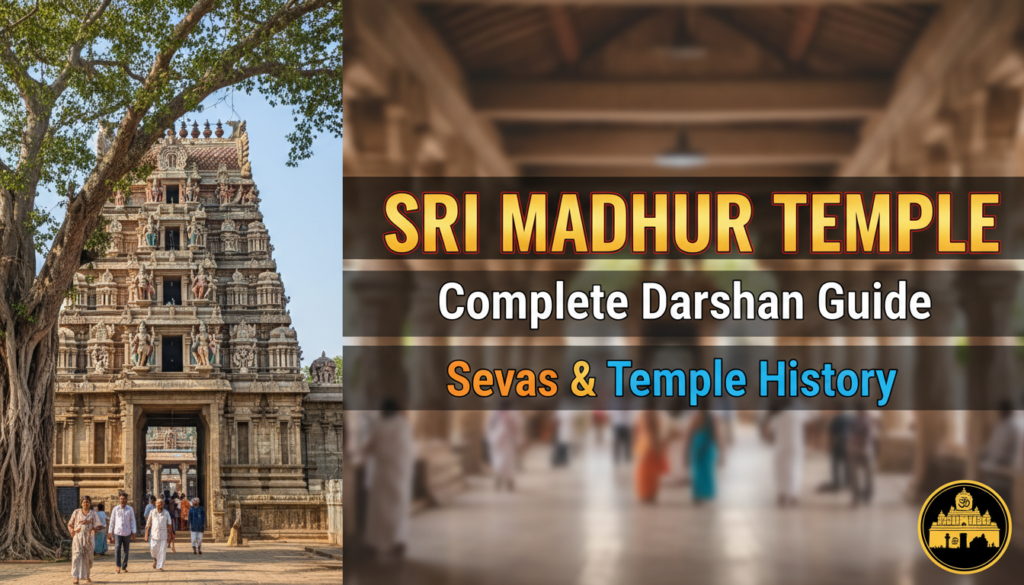
The temple is ancient and richly revered, with its origins dating back many centuries. Temples like these hold religious importance for local residents as well as for devotees from Karnataka, Tamil Nadu and other states. The main deities of the shrine are Lord Shiva (Madanantheshwara) and Lord Ganapathi (Siddhivinayaka), with Lord Ganapathi being especially prominent and worshipped with intense devotion.
Architecturally, Sri Madhur Temple is unique. It has a three-tiered Gajaprishta design, meaning the temple’s shape resembles the back of an elephant. This distinctive structure blends Kerala and Dravidian styles, with intricate wooden carvings and detailed artwork that showcase scenes from Hindu mythology, especially episodes from the Ramayana.
Inside the temple, sub-deities such as Kashi Vishwanatha, Dharmasastha, Subrahmanya, Durga Parameshwari and Veerabhadra are also worshipped. Devotees often combine their visit to Sri Madhur with other pilgrimage sites in the region, making this temple part of a broader spiritual journey.
Daily visitors find Sri Madhur a peaceful place of prayer, reflection and cultural heritage. Word of mouth and local traditions have helped maintain its name as a powerful and sacred centre of worship, especially for those seeking blessings from Lord Ganapathi and Lord Shiva.
Srirangam Vishwaroopa Temple Darshan 2026 | Timings, Sevas
Temple History and Legends of Sri Madhur
The history of Sri Madhur Temple is rooted in local legend and sacred lore. Ancient records and tradition suggest that the temple originally began as Shrimad Anantheshwara Temple, dedicated primarily to Lord Shiva. According to local stories, a woman named Madaru from the local Tulu community discovered a naturally formed Udbhava Murthy (a self-manifested Shiva Linga) in the area. This event was regarded as divine and marked the beginning of the temple’s history.
Another legend linked to the temple involves a young boy who played around the sanctum and drew the first image of Lord Ganapathi on the wall of the garbhagriha (sanctum sanctorum). Devotees believe that the picture itself began to grow, which led to a deepening devotion toward Ganapathi and the spread of his worship at this site. Today, the Ganapathi idol is one of the most revered in the temple.
A widely told historical tale involves Tipu Sultan, the 18th-century ruler. The story says that Tipu Sultan, on his military campaign, intended to attack and destroy the temple as he did with other shrines in the region. However, upon drinking water from the sacred temple well, he abandoned his plan to demolish the shrine. To symbolically satisfy his soldiers or scholars, he is believed to have made a mark with his sword on the temple structure, and that mark is still visible today as a reminder of this episode.
Over the centuries, Sri Madhur Temple grew in reputation due to its sacred environment and the power it holds in local belief. It has undergone renovations and expansions, yet the core spiritual traditions have remained intact. The temple also became a centre for learning, where Vedic classes were offered to young students to teach Sanskrit and ancient scriptures during summer vacations.
This blend of legend, history and community involvement makes Sri Madhur Temple not just a place of worship but also a living monument of cultural continuity.
Main Deities and Spiritual Importance
At the heart of Sri Madhur Temple lie its main deities, which are central to why millions of people visit here every year. The temple primarily honours:
- Lord Madanantheshwara (a form of Shiva) – believed to destroy desire and help devotees overcome worldly attachments.
- Lord Siddhivinayaka (Ganapathi) – worshipped for wisdom, success and the removal of obstacles, especially at the beginning of any important life event.
Even though Lord Shiva is traditionally the principal deity, Lord Ganapathi is deeply revered and often considered the most powerful presence in the temple. This unusual prominence of Ganapathi in a Shiva temple reflects the unique spiritual heritage of Sri Madhur Temple.
The positioning of the Ganapathi idol is distinctive: facing south in the main sanctum, a direction normally associated with powerful spiritual energy. This orientation is significant for devotees who feel that Ganapathi’s blessings are especially potent here.
In addition to these main deities, the temple complex includes sub-shrines and idols for other divine beings such as:
- Kashi Vishwanatha
- Dharmasastha
- Subrahmanya
- Durga Parameshwari
- Veerabhadra
These deities enrich the spiritual experience by providing devotees with multiple avenues for worship and prayer.
Spiritual practices at the temple are varied, with daily rituals, poojas, abhishekams and special sevas. Many devotees believe that praying here brings mental peace, relief from personal problems, success in ventures, and protection from difficulties. The serenity of the river bank, coupled with historic stone carvings and centuries-old traditions, gives Sri Madhur Temple an atmosphere that many describe as deeply calming and uplifting.
Because of this, Sri Madhur Temple is not just a local shrine but a regional spiritual destination for families, students, business people and travellers seeking blessings and fulfillment of sincere prayers.
Temple Architecture and Design
Sri Madhur Temple stands out for its distinctive architectural style, which blends local Kerala temple art with traditional Dravidian temple features. The design reflects both spiritual symbolism and regional craftsmanship, making the temple a visual as well as a sacred landmark.
The structure’s most striking architectural feature is its three-tiered Gajaprishta shape, which resembles the curved back of an elephant. This design is rare in temple architecture and gives the temple an elegant, grounded look that enhances its spiritual aura. The gopuram (main tower) and mandapams provide height and grandeur, making the entire complex visible from afar.
Wooden craftsmanship is a key highlight. The temple walls and pillars are adorned with intricately carved wooden panels that depict scenes from Hindu epics, especially the Ramayana. These carvings are not merely decorative; they tell stories, convey moral lessons and deepen the spiritual ambiance within and around the temple.
The Namaskara Mandapam (prayer hall) is another significant architectural space. This pavilion is designed for devotees to offer their prayers, meditate and participate in group ceremonies. Its location and design help maintain a sense of focus and reverence during worship.
Sri Madhur Temple also features a deep well within the temple compound. According to tradition, the water from this well has sacred importance and is believed to have healing and purifying qualities. The well is kept inside the complex but is not open to public use, emphasizing its sanctified status.
The temple is surrounded by a natural landscape of coconut groves, rice fields and small hills. The peaceful environment of the Kerala countryside adds to the temple’s architectural beauty, making Sri Madhur a place where spiritual design and nature complement each other.
Together, these architectural elements ensure that a visit to Sri Madhur Temple is visually memorable as well as spiritually fulfilling. The interplay of stone, wood, sculpture and river setting makes this temple a standout example of traditional South Indian temple design.
Darshan Timings and Daily Rituals
Knowing the darshan timings and daily ritual schedule is important for anyone planning a visit to Sri Madhur Temple in 2026. The temple follows a regular routine of worship and ceremonies that blend devotion with tradition.
Daily Darshan Timings
The temple is open for darshan at two main periods each day:
- Morning: 5:00 AM to 1:00 PM
- Evening: 5:30 PM to 8:15 PM or later, depending on special events and festivals
These timings allow devotees to perform both early morning prayers and evening aarti without rush.
Daily Rituals and Poojas
Sri Madhur Temple conducts a structured sequence of daily rituals, including:
- Morning Pooja – 8:00 AM: Devotees gather for the first formal prayer of the day.
- Rudrabhisheka – 11:00 AM: A sacred ritual involving the bathing of the Shiva Linga with holy substances.
- Navaka and Noon Pooja – 12:00 PM – 12:30 PM: Midday offerings and chanting ceremonies.
- Night Pooja – 8:00 PM: Final prayer session before temple closes for the night.
Rules and Practices for Devotees
The temple requests devotees to follow certain practices during their visit:
- Entry is traditionally restricted to Hindus in line with long-standing temple customs.
- Devotees are advised to wear traditional attire for respect and cultural observance.
These timings are typically consistent except during festivals or special occasions when extended darshan hours may be offered. Planning your visit early in the morning or later in the evening helps avoid crowds and ensures a more peaceful darshan.
Knowing this structured darshan schedule ahead of time makes it easier for pilgrims and visitors to coordinate travel plans, combine seva participation and fully absorb the spiritual atmosphere of Sri Madhur Temple.
Sevas and Poojas: Offerings at Sri Madhur Temple
Sri Madhur Temple offers a wide range of sevas (ritual services) and poojas that devotees can participate in according to their needs, beliefs and budget. These rituals allow worshippers to express devotion, seek blessings, and observe important traditions in a structured way.
Common Sevas (Offerings)
Some of the main sevas you can request at the temple include:
- Appam Offering: A simple offering of sweet rice cakes.
- Panchakajjaya: Traditional offering with rice and jaggery.
- Udayasthamana: A full day worship starting at sunrise.
- Rudrabhisheka: Ritual bath of the Shiva Linga with sacred elements.
- Ganapathi Homa: Fire ritual for Ganapathi blessing.
Special Poojas and Rituals
The temple also offers more detailed ceremonies such as:
- Ashtothara Archana: Chanting of 108 names of the deity.
- Payasa and Modaka Offerings: Sacred food offerings.
- Sankashtahara Chathurthi Pooja: Special Ganapathi ritual for relief from obstacles.
- Sahasra Appa Samarpane: Grand offering of 1000 appams.
- Mruthyunjaya Homa: Ritual for healing and longevity.
Life Event Services
The temple also supports rituals tied to life events, such as:
- Marriage ceremonies
- Upanayana (sacred thread initiation)
- Namakarana (naming ceremony)
These offerings help devotees mark important milestones and seek divine guidance during significant life changes.
Seva Costs
The temple provides seva details with suggested contributions (typically in Indian Rupees), helping visitors plan according to their intentions and budget. Examples include:
- Appam and Panchakajjaya (~₹20)
- Udayasthamana (~₹100)
- Ganapathi Homa (~₹60)
- Sahasra Appa Samarpane (~₹2,000)
- Larger seasonal rituals (~₹5,000 and above)
This variety makes worship accessible to both regular and occasional visitors.
These offerings are part of temple tradition and give devotees a way to participate in devotional practices beyond mere darshan, deepening personal connection to the divine.
Festivals and Annual Celebrations
Sri Madhur Temple celebrates several festivals and annual events that bring communities together and highlight the temple’s cultural importance. These occasions are among the busiest and most spiritually vibrant times of the year.
Ganesh Chaturthi
This festival, dedicated to Lord Ganapathi, is one of the most popular events at the temple. Devotees from nearby regions gather to take part in special rituals, abhishekams, and group prayers. Traditional offerings like sweet modakas and appams are distributed, and the atmosphere is festive with music and devotional chanting.
Madhur Bedi Festival
The Madhur Bedi is an annual five-day celebration that draws large crowds. This event includes:
- Ritual processions
- Special poojas and homas
- Folk performances and devotional singing
- Utsava moorthi (idol) processions on the fourth day
This festival showcases both religious devotion and regional cultural expression, making it a key attraction for visitors who want a lively spiritual experience.
Daily and Seasonal Celebrations
In addition to major festivals, the temple observes:
- Monthly sankatahara poojas
- Navaratri and other Hindu seasonal festivals
- Special events for specific deities associated with the temple
These observances give devotees multiple opportunities to participate in meaningful worship throughout the year.
Festivals at Sri Madhur Temple are more than just rituals; they are community gatherings that strengthen social bonds. People from different villages come together, share prasadam, and contribute to group prayers, creating a sense of unity and shared devotion.
For pilgrims planning a visit during festival times, it is advisable to check dates ahead of time and arrange travel and accommodation in advance due to the larger crowds.
How to Reach Sri Madhur Temple
Sri Madhur Temple is easily accessible from multiple transport points in South India, making it convenient for both local devotees and long-distance visitors. Located near Kasaragod in Kerala, the temple lies in a region that is well connected by road, rail and air.
By Road
Madhur Temple is about 7–8 km from Kasaragod town. It can be reached easily by private car, taxi or local buses. The roads leading to the temple are well-paved and signposted, making navigation straightforward for travelers.
By Rail
The nearest railway station is Kasaragod Railway Station, which is about 8.6 km from the temple. This station is connected to major cities in Kerala and neighboring states, offering a comfortable option for pilgrims traveling from afar.
By Air
For visitors coming by air, Mangaluru International Airport is the closest major airport, located roughly 60 km from the temple. From there, you can hire a taxi or take a bus toward Kasaragod and then proceed to the temple.
Local Transport Tips
- Buses from Kasaragod to Madhur village are available at frequent intervals, though private vehicles or taxis offer greater flexibility.
- Road travel is generally smooth, but you should allow extra time during festival seasons when traffic and crowds increase.
- When planning your trip, check local weather and bus schedules for a comfortable journey.
Planning your route with these options in mind helps ensure a smooth and stress-free visit to Sri Madhur Temple.
Accommodation and Nearby Attractions
While Sri Madhur Temple is a spiritual destination, visitors often combine their pilgrimage with stays in nearby towns and sightseeing of local attractions. Kasaragod district offers both simple lodging and cultural sites that enhance your experience.
Accommodation Options
- Hotels and guest houses in Kasaragod town – A range of budget and mid-range options are available for overnight stays.
- Homestays and lodges near Madhur village – Basic facilities with close access to the temple can be found within a short distance.
Booking ahead, especially during festivals like Ganesh Chaturthi or Madhur Bedi, is recommended because demand increases and rooms fill up quickly.
Nearby Attractions
If your visit allows, consider exploring these local attractions:
- Ananthapura Lake Temple – A historic floating temple known for its serene setting.
- Bekal Fort – A scenic coastal fort that offers views of the Arabian Sea.
- Mogral River surroundings – The temple’s riverside location is ideal for peaceful walks and nature appreciation.
Local eateries in Kasaragod offer Kerala-style vegetarian meals and refreshments. Sampling local dishes like appam or pancake-style offerings after temple visits is a popular activity for visitors.
Whether you’re there for spiritual darshan or a cultural trip, the region around Sri Madhur Temple has a balanced mix of religious, historical and natural sights.
Tips for Devotees and Visitors in 2026
Planning a visit to Sri Madhur Temple in 2026 can be more rewarding when you consider some practical tips and cultural practices. These suggestions help you make the most of your experience, whether your focus is devotion, tourism or cultural exploration.
Before Your Visit
- Check temple timings ahead of your trip. Daily darshan hours may change slightly during festivals or special occasions.
- Dress respectfully: Traditional attire is advised. For men, a dhoti or mundu; for women, a saree or salwar kameez.
- Plan transport from Kasaragod or Mangaluru Airport in advance, especially if traveling during weekends or holidays.
On the Temple Visit
- Arrive early in the morning or evening to avoid peak crowds and enjoy a calmer darshan.
- Participate in specific sevas or rituals that match your intentions and budget.
- Respect local customs and restrictions, including the traditional practice of entry preferences.
During Festive Periods
- Festivals like Ganesh Chaturthi and Madhur Bedi attract large crowds. Book accommodation early and allow extra time for darshan queues.
- Bringing water, snacks and comfortable footwear will help during long days of waiting or walking.
Health and Safety
- Carry basic medicines and be mindful of the weather. Summers in Kerala can be hot and humid.
- During monsoon seasons, roads may be wet, so plan travel accordingly.
With these practical considerations, your pilgrimage or visit to Sri Madhur Temple in 2026 can be spiritually fulfilling and smooth.