
Gurudwara Hemkund Sahib is one of the most important Sikh pilgrimage sites in India. It sits high in the Garhwal Himalayas of Uttarakhand’s Chamoli district at around 15,000 feet above sea level. The shrine is dedicated to Guru Gobind Singh and lies beside a beautiful glacial lake.
Every year, thousands of devotees and spiritual travellers come here to seek peace, “darshan” (holy viewing), and a deep connection with their faith. The journey to Hemkund Sahib is both a spiritual pilgrimage and a scenic trek. Most people begin their journey at Govindghat, a small village on the Rishikesh-Badrinath highway. From there, they walk through forests, mountain valleys, and high-altitude paths to reach the gurudwara.
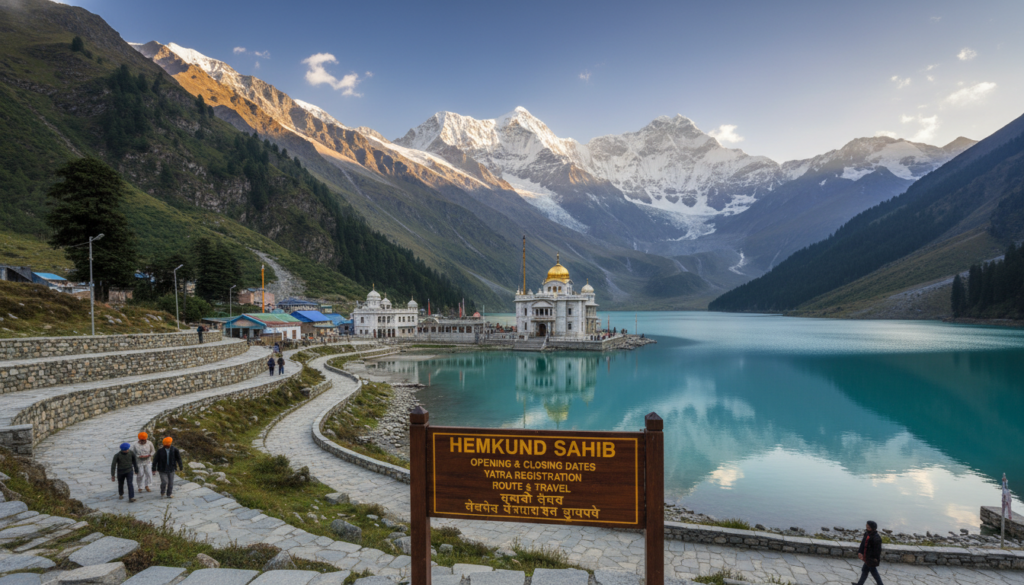
Because Hemkund Sahib lies in a snow-bound region, the yatra is only open during certain months of the year. Outside this period, snow covers the roads and paths, making it unsafe and impossible to visit. Knowing the dates, registration process, and travel details helps you plan the pilgrimage safely and comfortably.Char Dham Yatra 2026: Registration, Dates, Route, Cost & Essential Tips
Hemkund Sahib Yatra Overview Table
| Feature | Details |
|---|---|
| Pilgrimage Name | Hemkund Sahib Yatra |
| Location | Chamoli District, Uttarakhand, India |
| Deity / Shrine | Gurudwara Hemkund Sahib, dedicated to Guru Gobind Singh |
| Elevation | ~15,000 ft above sea level |
| Opening Date 2026 | Around 25 May 2026 (tentative) |
| Closing Date 2026 | Around 10 October 2026 (tentative) |
| Starting Point | Govindghat (base village) |
| Nearest Town | Joshimath |
| Access | Trek route from Govindghat via Ghangaria |
| Important | Trek is steep and high altitude |
This table gives you a quick overview of the key facts for planning your Hemkund Sahib yatra in 2026
Spiritual Significance of Hemkund Sahib
Hemkund Sahib holds deep spiritual meaning for many Sikh pilgrims. According to Sikh tradition, Guru Gobind Singh Ji, the tenth Sikh Guru, meditated at this site in a previous life. The shrine and the glacial lake beside it are seen as symbols of purity, devotion, and peace.
Many devotees believe that undertaking this pilgrimage helps them grow spiritually and strengthens their faith. The trek itself is considered an act of devotion, requiring endurance, courage, and inner focus.
Apart from its Sikh importance, the natural setting of Hemkund Sahib — high peaks, clear skies, and the pristine lake — adds to the spiritual experience. The silence and beauty of the Himalayas help pilgrims meditate and feel connected to the divine.
This yatra is not just a physical journey. For many, it is a life-changing experience that brings clarity, patience, and inner calm.
2026 Opening and Closing Dates
The 2026 Hemkund Sahib Yatra is expected to open and close according to the yearly weather cycle in the Himalayas. This depends on when heavy snow melts in the spring and when snow starts again in autumn.
Based on announcements and travel guides:
- Opening Date (2026): Around 25 May 2026 when the shrine doors (“Kapaat”) are officially opened for pilgrims.
- Closing Date (2026): Around 10 October 2026 when the yatra season ends before winter sets in.
These dates are usually confirmed by the Gurudwara committee and local authorities as the snow begins to melt and the path becomes safe.
Opening the yatra means that kar seva volunteers and local teams have cleared snow and prepared the trail for pilgrims. After the closing date, heavy snowfall makes the trek unsafe and access to the shrine is closed until the next season.
How Registration Works
For the Hemkund Sahib Yatra, registration is usually necessary for organized groups, especially those that use official travel teams, guides, or government-linked services.
Many pilgrims register through the Uttarakhand Tourism Care portal or a mobile app provided by authorities. Registration helps manage crowd control, safety, and emergency support during the yatra. It ensures pilgrims have a unique identification number and a registration letter or certificate.
These documents must be carried during the yatra and can be checked at checkpoints on the route. For those who cannot register online, physical registration centres — such as at Rishikesh — may be available where pilgrims can complete forms in person.
Registration also often requires a valid ID proof (like Aadhaar for Indian citizens) and contact details. Please check the official Uttarakhand Tourism website or local Gurudwara announcements for exact steps and deadlines each year.
Best Route to Reach Hemkund Sahib
The Hemkund Sahib Yatra begins at a village called Govindghat on the Rishikesh-Badrinath Highway. Most pilgrims travel to Govindghat by road — usually after reaching Rishikesh or Haridwar by train or bus.
From Govindghat, the journey continues on foot (trek route). The trek goes through:
- Govindghat to Ghangaria: About 13 km through scenic mountain trails.
- Ghangaria to Hemkund Sahib: About 6 km uphill climb on stone and rocky paths.
The total distance from Govindghat to Hemkund Sahib is roughly 19 km one way. This trek is challenging because of altitude, steep sections, and narrow paths.
Along the way, there are rest points, basic eating places, and small shelters. Many pilgrims also visit the Valley of Flowers near Ghangaria, a beautiful national park known for wildflowers and scenic views.
Travel and Trek Details
The Hemkund Sahib trek combines road travel with mountain trekking. Most pilgrims take a series of vehicles and then walk:
- Reach Rishikesh or Haridwar: These are common starting cities connected by trains and buses from many Indian states.
- Road to Govindghat: From Rishikesh, pilgrims travel by bus or taxi for 245–300+ km to reach Govindghat.
- Trek to Ghangaria: The 13 km trek is scenic but uphill.
- Trek to Hemkund Sahib: The final 6 km is steep and rocky.
Distance from other key towns: Hemkund Sahib is about 42 km from Badrinath and 36 km from Joshimath by road before the trek begins.
Trekking portions can take 4–6 hours or more, depending on fitness and weather. Many pilgrims choose to stay overnight in Ghangaria before heading up to Hemkund Sahib the next day.
Fitness and Preparation
The Hemkund Sahib route is high and steep. Because the shrine stands at about 15,200 feet above sea level, the trek can be physically demanding for many people.
Pilgrims should prepare with:
- Physical conditioning: Walking, stair climbing, and light hikes in advance help build stamina.
- Warm clothing: Even in summer, temperatures near Hemkund can be cold, especially mornings and evenings.
- Water and snacks: Staying hydrated helps prevent altitude sickness.
- Good shoes: Trekking shoes with grip will reduce risk on rocky paths.
Altitude sickness is a real risk at higher elevations, especially if you rise too fast. Take breaks during your trek, and if you feel dizzy or unwell, slow down or descend. Always trek with a guide or in groups for safety.
Accommodation and Food on the Route
There are several places to stay and eat during the Hemkund Sahib yatra:
- Govindghat: Basic lodges, hotels, and guesthouses are available.
- Ghangaria: Larger village with more accommodation options, including guest houses and camps.
- Tented stays: Especially during peak season, temporary camps may be set up for trekkers.
Food options along the route include simple vegetarian meals, dal-rice, chapati, tea, and snacks. It’s a good idea to carry water and light snacks during the trek stages.
Local eateries may be busy during peak yatra dates, so arrive early or book stays ahead of time.
Weather and Best Time to Visit
The best months for your Hemkund Sahib Yatra 2026 are:
- Late May to mid-June: Early season with clearer skies.
- September to early October: After monsoon, with pleasant weather.
The monsoon months (July–August) can bring heavy rains, landslides, and slippery trails. Snow starts returning by October, so the yatra season ends to keep pilgrims safe.
Weather in the Himalayas is unpredictable. Even in summer, temperatures can drop suddenly, and rain or snowstorms can occur. Check forecasts before you start your trek.
Safety Considerations and Tips
Hemkund Sahib Yatra is a high-altitude trek, so staying safe is vital. Here are some tips:
- Stay on the marked trail: Avoid shortcuts or closed paths to reduce risk.
- Trek with a group: Guides and companies know the route well.
- Altitude awareness: If you feel sickness, descend or seek help.
- Carry essentials: Water, warm clothes, rain gear, and basic first-aid.
- Respect local guidelines: Weather or authorities may restrict travel during risky conditions.
Being prepared and cautious makes the pilgrimage more peaceful and safe for you and others.
FAQs (Frequently Asked Questions)
Q1. When does Hemkund Sahib open in 2026?
The shrine is expected to open around 25 May 2026 after winter snow melts.
Q2. When does the yatra season end?
The pilgrimage is likely to close around 10 October 2026 before heavy snow returns.
Q3. How do I register for the yatra?
You can register online through the Uttarakhand Tourism Care portal or mobile app, and physical registration centers may also be available.
Q4. How hard is the trek?
The trek involves steep climbing at high altitude, so good fitness and proper gear are essential.
Q5. What is the starting point?
Most pilgrims begin from Govindghat and trek through Ghangaria to reach Hemkund Sahib.
Q6. Is accommodation available on the route?
Yes. You’ll find guesthouses and lodges in Govindghat and Ghangaria, and sometimes tent stays during peak season.
Q7. Can I visit Hemkund Sahib in winter?
No. The shrine is closed in winter months (November–April) due to heavy snow.