
The Char Dham Yatra is one of the most revered Hindu pilgrimages in India. It refers to a spiritual circuit that connects four sacred shrines high in the Garhwal Himalayas of Uttarakhand: Yamunotri, Gangotri, Kedarnath and Badrinath. The word “Char Dham” means “four abodes” or “four holy places,” and visiting them is believed to bring spiritual cleansing, blessings, peace, and liberation from sins.
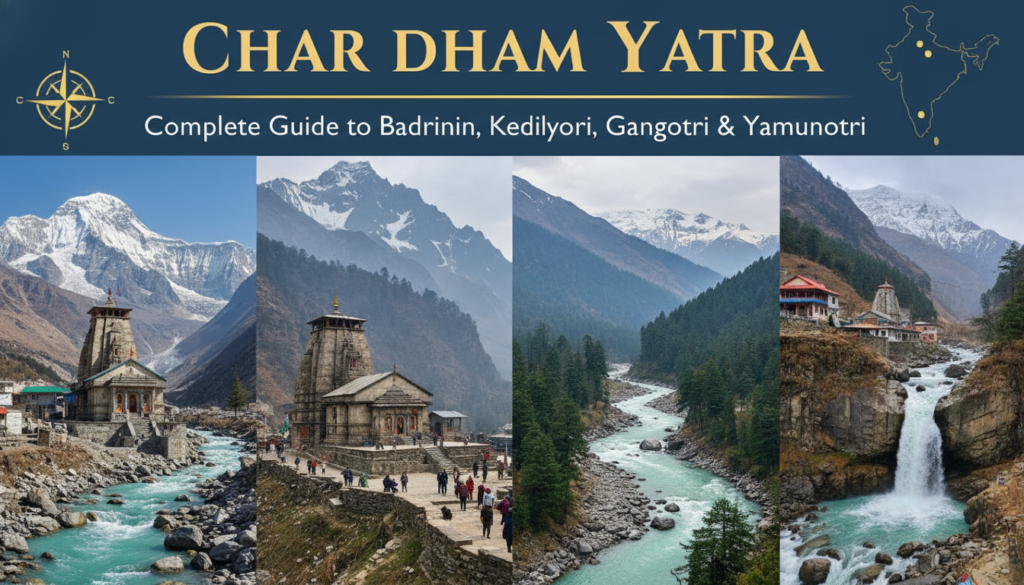
Pilgrims from across India and abroad begin this journey usually from Haridwar, Rishikesh or Dehradun, which are the nearest major transport hubs with rail, road and air connectivity. From these gateway cities, devotees travel into mountainous terrain, facing winding roads, changing weather, and high-altitude challenges.
The yatra is not just a physical trip but a spiritual commitment. Many devotees undertake it with faith that visiting all four Dhams can help them attain inner peace and fulfillment. It combines elements of devotion, endurance, and cultural heritage, as each dham has a unique story and traditional customs.
Typical features of the Char Dham Yatra include:
- Pilgrimage Purpose: Spiritual merit and divine blessings.
- Geographical Context: High altitude Himalayan routes with scenic valleys and mountain views.
- Pilgrim Flow: Seasonal, largely between April/May and October/November.
- Cultural Practices: Temple rituals, local traditions, chanting and offerings.
While historically the yatra was undertaken on foot over long distances, today most devotees travel by road except for specific trekking stretches. Despite modern access, the journey still demands good planning and physical preparation.
Read also :Tirumala Footpath Darshan Guide 2026: Srivari Mettu vs Alipiri Steps
Char Dham Yatra 2026 Opening and Closing Dates
One of the most important parts of planning the Char Dham Yatra is knowing the opening and closing dates of the temples in 2026. These dates are set by the Badrinath-Kedarnath Temple Committee and reflect when snow has sufficiently cleared and the roads are passable.
In 2026, the expected opening dates for the main shrines are:
- Yamunotri Temple: 19 April 2026
- Gangotri Temple: 19 April 2026
- Kedarnath Temple: 22 April 2026
- Badrinath Temple: 24 April 2026
These dates are announced before the pilgrimage season and often tied to auspicious days in the Hindu calendar.
Closing dates vary but generally fall around October or early November before winter snowfall blocks access. Since Uttarakhand receives heavy snow at higher altitudes, the temples close as conditions become unsafe.
Key points about the dates:
- These dates can sometimes change by a day or two based on weather conditions and official announcements.
- The opening of Badrinath has been officially announced for 23 April 2026, with preparations and rituals starting in early April, making it a significant starting point for many pilgrims.
- Pilgrims should confirm final dates with official Uttarakhand government or temple committee updates before planning travel.
Knowing the exact dates helps you plan hotel bookings, transportation, and route sequencing to avoid delays or denied access at closed temples.
Best Time to Visit and Seasonal Conditions
The Char Dham Yatra season runs from late April or early May to October/November each year. Within this window, some months are better suited for travel based on weather, road conditions, and crowd levels.
Optimal Months to Visit:
- May to June: This is considered the most favourable period for the pilgrimage. The weather is usually clear, with daytime temperatures ranging from mild to warm and cooler nights. Snow remains on the peaks, providing beautiful scenery without blocking roads.
- September to October: After the monsoon, the skies become clear again and temperatures are comfortable. There is less risk of rainfall blocking roads, and landscape views are refreshed by the rains.
Months to Avoid:
- July to August: This is the peak monsoon season in the Himalayas. Heavy rainfall can result in landslides or blocked highways, particularly near Yamunotri and Gangotri, causing travel disruptions or longer transit times.
- Late October to November: Roads begin to close due to snowfall, and the risk of getting stranded increases. Pilgrims should aim to finish their trip well before this.
Seasonal Weather Considerations:
- Altitude Impact: At higher elevations, such as Kedarnath and Badrinath, weather can change rapidly even in summer. Cold nights and sudden rain or snow showers are possible.
- Crowd Patterns: Peak months like May and June see more pilgrims, which means busier roads and booked accommodation, while later months can be quieter.
Understanding these factors helps you choose travel dates that balance weather safety, crowd levels, and personal schedule.
Read also :Ambalappuzha Sree Krishna Temple (2026) Darshan Timings
Detailed Route and Itinerary Planning
The traditional Char Dham Yatra route follows a geographical sequence that minimizes backtracking and adapts to the terrain. Most pilgrims start their journey from a connected transport hub like Haridwar, Rishikesh or Dehradun.
A common itinerary sequence is:
- Haridwar/Rishikesh/Dehradun (Start Point)
- Yamunotri
- Gangotri
- Kedarnath
- Badrinath
- Return to base city
This order makes sense because it follows the west-to-east progression across the Uttarakhand Garhwal region, gradually increasing altitude and then descending toward Badrinath.
Sample Daily Breakdown:
- Day 1: Arrive in Haridwar/Rishikesh. Rest and prepare.
- Day 2: Travel to Barkot (base for Yamunotri).
- Day 3: Yamunotri darshan, return to Barkot.
- Day 4: Drive to Uttarkashi and prepare for Gangotri.
- Day 5: Visit Gangotri and return.
- Day 6: Move toward Guptkashi/Gaurikund region.
- Day 7: Trek to Kedarnath or use helicopter option.
- Day 8: Return and proceed toward Joshimath/Badrinath direction.
- Day 9: Badrinath darshan and begin return.
- Day 10: Head back to Haridwar/Rishikesh.
This example itinerary usually spans 10 to 12 days, depending on your pace, road delays, and how much time you spend at each dham.
Important Route Notes:
- Road travel is the main mode of transport, but for Kedarnath, the final stretch involves a 15–16 km trek from Gaurikund unless you book helicopter services.
- Pilgrims should allow extra time for unexpected delays like road repairs or weather conditions.
Distances, Altitudes and Travel Times
Understanding distances and travel times helps you plan each leg of the yatra realistically. Mountain roads are slower than plains travel, and narrow curves or checkpoints can add extra time.
Distances (Approximate):
- Haridwar/Rishikesh to Barkot (Yamunotri base): ~180–190 km
- Barkot to Yamunotri darshan route: Drive to Janki Chatti then 6–7 km trek
- Uttarkashi to Gangotri: ~100–120 km
- Gangotri to Rudraprayag: ~270–280 km
- Rudraprayag to Gaurikund (Kedarnath base): ~70–75 km
- Gaurikund to Kedarnath temple: ~15–16 km trek route
Altitude Details:
- Yamunotri: ~3,293 meters
- Gangotri: ~3,100 meters
- Kedarnath: ~3,583 meters
- Badrinath: ~3,133 meters
Travel Time Considerations:
Mountain driving can vary widely based on road conditions:
- A 100–120 km mountain drive can take 4–6 hours.
- Long stretches like Gangotri to Rudraprayag (250+ km) can take 7–9 hours.
- Trek routes like Gaurikund to Kedarnath typically require 6–9 hours on foot for fit pilgrims unless using helicopter or pony support.
Practical Tips:
- Start early in the day to avoid afternoon weather changes.
- Carry water, snacks and basic medicine for long roads.
Read also :Ayodhya Deepotsav 2026 : Online Registration Free E-Pass
Temple Registration, Permits and E-Pass Requirements
For Char Dham Yatra 2026, registration is mandatory for all pilgrims before entering the yatra route. This helps authorities manage crowds, provide safety services and track pilgrims for emergencies.
Key Registration Facts:
- Registration is required for visits to Yamunotri, Gangotri, Kedarnath and Badrinath temples.
- You can register online through the official Uttarakhand government portal (registrationandtouristcare.uk.gov.in).
- The process involves entering personal information, travel details and uploading valid ID proofs such as Aadhaar, Voter ID, Passport or Driving License.
Registration Options:
- Online Portal: Fill details, upload ID, and download the e-pass or QR code.
- Mobile App: Use the Tourist Care Uttarakhand app to complete registration.
- Offline Counters: Available at certain checkpoints along the route.
Important Notes:
- Your unique registration number (URN) and e-pass may be checked by officials at checkpoints.
- Some helicopter and travel packages require the e-pass number before booking.
- Register early (ideally several weeks before travel), as peak season slots fill up fast.
These measures ensure better crowd control and help with rescue operations in case of weather emergencies.
Read also :Srirangam Vishwaroopa Temple Darshan 2026 | Timings, Sevas
Accommodation and Food Along the Route
Accommodation options vary widely along the Char Dham route, and planning where to stay can significantly affect your comfort and schedule.
Base Towns and Stay Options:
- Haridwar/Rishikesh/Dehradun: Before starting the pilgrimage, you’ll find hotels, guest houses and budget lodges. These cities have the widest range of options and easy connectivity.
- Barkot (Yamunotri region): Offers basic hotels and dharamshalas for pilgrims.
- Uttarkashi (Gangotri direction): Hotels and guest houses with more options than remote areas.
- Guptkashi/Gaurikund (near Kedarnath base): Budget lodges and dharamshalas; rooms fill quickly in peak season.
- Joshimath/Badrinath: Better array of hotels and pilgrim guest houses.
Booking Tips:
- Reserve rooms well in advance, especially for May-June and September-October.
- During peak yatra periods, local accommodations can run out quickly.
Food and Dining:
- Roadside dhaba food and small local eateries are common.
- Mountain towns often stock simple vegetarian meals suitable for pilgrims.
- Carry snacks, water, and energy bars during long road days, as stops can be infrequent in some stretches.
Some tour packages combine hotel stays with meals, transport, and support services, which can simplify logistics.
Helicopter Services and Trek Options
While most of the Char Dham Yatra is by road, the Kedarnath shrine involves a significant trek unless you opt for a helicopter service.
Trek Details:
- The walk from Gaurikund to Kedarnath Temple is approximately 15–16 km one way.
- The trek is moderate to strenuous and takes 6–9 hours for most people on foot.
- Ponies, palanquins and porter services are available for portions of the trek but should be booked locally.
Helicopter Option:
- Helicopter services operate from base points such as Phata or Dehradun directly to Kedarnath helipads.
- This option is popular for pilgrims with limited time, elderly travelers, or those preferring to avoid long treks.
- You must have your Char Dham Yatra registration number before booking helicopter seats.
Pros and cons to consider:
- Pros: Saves time, reduces physical strain, faster temple access.
- Cons: Higher cost and limited seats during peak season.
Even with helicopter options, some walking and road travel remains part of the journey, so physical readiness is still important.
Read also :Grishneshwar Temple Darshan, Sevas & VIP Booking 2026
Safety, Weather, and Road Conditions
Traveling in the mountains always involves risks that pilgrims should understand and plan for. Weather can shift quickly, and road conditions vary by season.
Weather Tips:
- Early morning starts reduce the chance of rain or fog later in the day.
- Bring layers, waterproof gear, sunscreen and sturdy walking shoes.
- Snow or ice at higher altitudes can occur even outside winter months.
Road Conditions:
- Roads to dhams are generally well-used but narrow and winding.
- Monsoon months (July-August) increase the risk of landslides and blocked highways, especially near Yamunotri and Gangotri routes.
- Local authorities may halt travel temporarily due to weather alerts or safety concerns.
Health and Altitude:
- Hydrate well and avoid overexertion at high altitudes.
- If you have breathing or heart conditions, consult a doctor before travel.
Emergency Preparedness:
- Save local emergency contact numbers and temple helpline information.
- Keep digital and physical copies of registration documents, ID and travel plans.
Following these precautions can make your pilgrimage safer and more enjoyable.
Practical Tips to Plan Your Char Dham Yatra Successfully
A smooth and memorable Char Dham Yatra depends on planning, preparation, and awareness of what to expect on this mountain pilgrimage.
Budget Planning:
- Travel and stay costs vary by month and mode (road vs helicopter).
- Packages often start around ₹28,000–₹45,000 per person for 10–12 day tours with hotel stays and meals.
Packing Essentials:
- Warm clothing (layers)
- Trekking/walking shoes
- Medicines and first aid
- Water bottle and energy snacks
- Power banks and chargers
Registration and Documents:
- Complete your Char Dham Yatra registration and save the e-pass and QR code.
- Keep valid ID proofs handy for checks during the journey.
Local Etiquette:
- Respect temple norms and local customs.
- Be patient with crowds and road delays.
Timing Strategy:
- Plan key temple visits early in the day when crowds are smaller and weather is stable.
Transport and Vehicle Tips:
- Hiring a private vehicle with an experienced driver can make long mountain drives easier.
- Public transport is available but may be slow or crowded.
With thought and preparation, your Char Dham Yatra can be spiritually fulfilling and logistically smooth. Whether you are a first-time pilgrim or returning, knowing what to expect at each step enhances your confidence and experience.The Char Dham Yatra is one of the most revered Hindu pilgrimages in India. It refers to a spiritual circuit that connects four sacred shrines high in the Garhwal Himalayas of Uttarakhand: Yamunotri, Gangotri, Kedarnath and Badrinath. The word “Char Dham” means “four abodes” or “four holy places,” and visiting them is believed to bring spiritual cleansing, blessings, peace, and liberation from sins.
Pilgrims from across India and abroad begin this journey usually from Haridwar, Rishikesh or Dehradun, which are the nearest major transport hubs with rail, road and air connectivity. From these gateway cities, devotees travel into mountainous terrain, facing winding roads, changing weather, and high-altitude challenges.
The yatra is not just a physical trip but a spiritual commitment. Many devotees undertake it with faith that visiting all four Dhams can help them attain inner peace and fulfillment. It combines elements of devotion, endurance, and cultural heritage, as each dham has a unique story and traditional customs.
Typical features of the Char Dham Yatra include:
- Pilgrimage Purpose: Spiritual merit and divine blessings.
- Geographical Context: High altitude Himalayan routes with scenic valleys and mountain views.
- Pilgrim Flow: Seasonal, largely between April/May and October/November.
- Cultural Practices: Temple rituals, local traditions, chanting and offerings.
While historically the yatra was undertaken on foot over long distances, today most devotees travel by road except for specific trekking stretches. Despite modern access, the journey still demands good planning and physical preparation.