
Navadurga refers to the nine forms of Goddess Durga worshipped during Navratri, one of the most important Hindu festivals of the year. Navratri means “nine nights,” and it honors the divine feminine energy called Shakti. Devotees celebrate this festival with prayers, fasting, rituals, sacred mantras, and music. Each of the nine days is dedicated to one form of the Goddess, known collectively as Navadurga. The festival has deep spiritual meaning and is believed to bring strength, harmony, protection, and blessings into life.
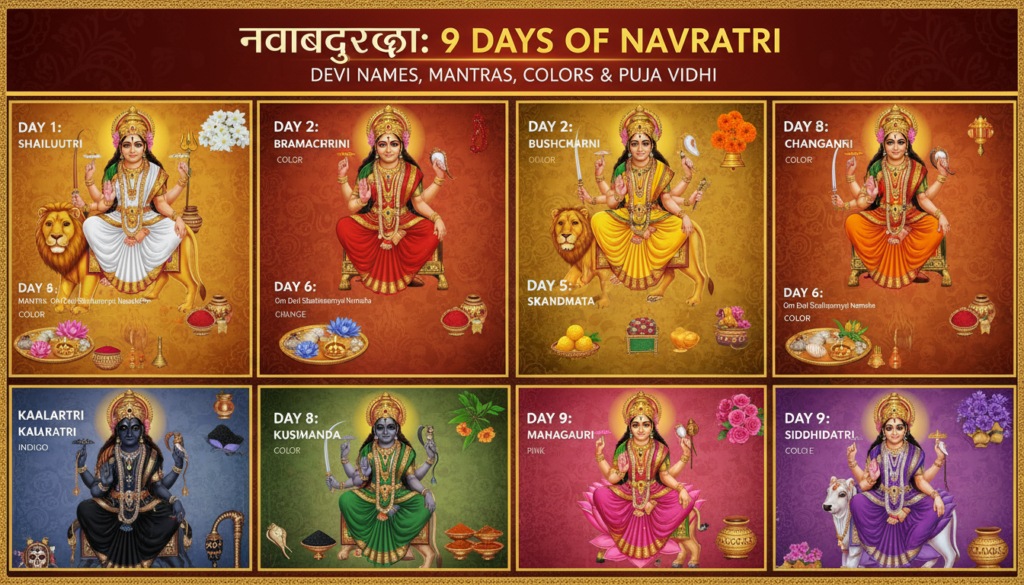
There are multiple Navratris in a year, but the most widely celebrated one in autumn is called Sharad Navratri. In 2026, Sharad Navratri will start on October 11 and continue for nine days until October 19 or 20, followed by Vijayadashami (Dussehra). During these nine days, people pray in homes and temples, perform puja, chant mantras, and often observe a fast as an act of devotion. The festival represents the victory of good over evil and the power of divine energy protecting the world.
Navadurga 2026 Overview Table
| Feature | Details |
|---|---|
| Festival Name | Navratri 2026 (Navadurga Worship) |
| Main Dates (Autumn) | October 11 to October 19, 2026 |
| Festival Type | Hindu spiritual festival |
| Deity | Goddess Durga in nine forms |
| Number of Days | 9 days of Navratri |
| Puja Focus | Navadurga, mantras, rituals |
| Navadurga Names | 9 divine forms of Durga |
| Daily Colors | Special colors assigned each day |
| Common Rituals | Ghatasthapana, mantra chanting, fasting |
| Main Conclusion | Vijayadashami / Dussehra |
This table gives the main facts about the Navadurga celebration for 2026
What Is Navratri and Why It Is Celebrated
Navratri is a Hindu festival that lasts nine days and nine nights. It is dedicated to honoring the Goddess Durga and her nine divine forms called Navadurga. The festival is rooted in stories of courage and the victory of good over evil. People often remember how Durga fought and defeated demons and protected the world from harm. Celebrating Navratri is a way of expressing devotion, purifying the body and mind, and inviting inner strength.
In India, Navratri is not only a spiritual festival but also a cultural event. In many regions, people hold music, dance, and devotional gatherings. Temples and homes are decorated with lights and flowers during these days. The festival ends with Vijayadashami or Dussehra, symbolizing the final victory of good over evil.
Navratri’s dates depend on the lunar calendar. For example, the autumn Navratri in 2026 begins in October, corresponding to the Ashwin month in the Hindu calendar. Other Navratris like Chaitra Navratri occur earlier in the year, during March, and are also important for religious observances
Navadurga: The Nine Divine Forms of Goddess Durga
Each of the nine days of Navratri is dedicated to one form of Goddess Durga, known as Navadurga. These divine forms represent different attributes like strength, courage, love, purity, and wisdom. The nine forms, each worshipped on a specific day, are:
- Shailaputri
- Brahmacharini
- Chandraghanta
- Kushmanda
- Skandamata
- Katyayani
- Kalaratri
- Mahagauri
- Siddhidatri
Devotees offer prayers to each form with specific mantras and intentions. For example, Shailaputri is often worshipped for strength and purity, while Siddhidatri is prayed to for wisdom and fulfillment of goals. The progression of worship is thought to help devotees build spiritual focus and divine connection through the nine days.
Navratri 2026 Dates and Tithi
For 2026, the most widely observed Navratri (Sharad Navratri) begins on Sunday, October 11 and continues for nine days. It traditionally concludes on the ninth day, followed by Vijayadashami (Dussehra) which is celebrated on the tenth day.
The date and tithi for each year are determined by the Hindu lunisolar calendar. Prayers and pujas are usually timed according to auspicious tithis (moon days) and muhurat. Early morning or evening puja hours are considered especially suitable for spiritual rituals.
Other Navratris in 2026 include Magh Navratri (Gupt Navratri) in January and Chaitra Navratri in March. Each of these also celebrates the divine mother in nine forms but with a slightly different focus and traditional timetable.
Navratri Fasting and Mantras
Many devotees observe fasting (vrat) during the nine days of Navratri as a form of purification and discipline. Fasting can range from total fasting to eating specific foods like fruits, milk, nuts, or vrat foods without grains. The practice depends on personal choice and family tradition. Fasting is believed to help focus the mind on faith and spiritual growth.
During Navratri, devotees chant mantras dedicated to the Goddess. Some commonly used mantras include the Durga Mantra (“ॐ दुं दुर्गायै नमः”) and the Navadurga mantras for each form of the Goddess. These mantras help invite divine grace and protect against negative thoughts or energies. Sacred texts and temple traditions also guide specific chants and recitations for each day of Navratri.
Chanting mantras with devotion is seen as a way to deepen one’s spiritual connection and invite blessings for health, success, and protection.
Daily Puja Vidhi for Navratri
During the nine days of Navratri, many households and temples perform daily puja to honor the Goddess. A simple puja vidhi may include:
- Cleaning the home and prayer area
- Setting up a Kalash (sacred pot) or image of the Goddess
- Lighting a diya (lamp) and offering flowers
- Chanting mantras and slokas
- Offering fruits, sweets, and prasad
- Performing aarti (ritual waving of light)
The ritual of Ghatasthapana (placing the sacred Kalash) marks the first day and welcomes the divine presence. Throughout Navratri, devotees recite prayers and offer devotion to each form of Navadurga. Many families also perform Kanya Puja (worship of young girls) on the eighth or ninth day as a symbolic gesture of honoring the divine feminine.
Daily puja helps maintain a rhythm of devotion and focus during the festival.
Navratri Colors for Each Day
During Navratri, many people follow a tradition of wearing a specific color each day to honor the Goddess and invite positive energy. Colors are chosen for their symbolic meaning, such as purity, strength, peace, and joy. For Sharad Navratri 2026, these colors start with Orange on the first day, followed by White on the second day, and continue through the nine days with different tones assigned to each day.
Wearing these colors is a way of expressing devotion and unity. It also helps devotees stay in a positive mindset, respectful of the spiritual meaning of each day.
Significance of Each Navadurga Form
Each Navadurga form has its own spiritual meaning.
- Shailaputri symbolizes strength and virtue.
- Brahmacharini stands for penance and devotion.
- Chandraghanta represents courage and peace.
- Kushmanda is believed to bring cosmic energy.
- Skandamata is honored as the mother of all.
- Katyayani is worshipped for courage and success.
- Kalaratri helps remove fear.
- Mahagauri represents purity.
- Siddhidatri grants spiritual achievement and fulfillment.
Devotees focus their prayers on the qualities associated with each form to seek blessings for health, prosperity, wisdom, and protection.
Navratri Symbols and Items Used in Puja
During Navratri puja, devotees use specific items that symbolize purity and devotion:
- Kalash (sacred pot with water and mango leaves)
- Flowers and garlands
- Incense sticks and oil lamps (diyas)
- Fruits and sweets as offerings
- Holy books and mantra sheets
- Red cloth and vermillion (kumkum)
These items represent the offering of respect and love to the divine mother. Proper placement and careful ritual action are believed to enhance the spiritual benefit of the puja.
Navratri Celebrations Across India
Navratri is celebrated differently in various regions of India. In North India, people often organize garba and dandiya dance events during the evenings. In West Bengal, it overlaps with Durga Puja celebrations that include idol processions and cultural programs. Across the country, temples hold special events, and communities come together for prayers, food distribution (prasad), and devotional singing.
Though local practices vary, the main theme remains the same: honoring the nine forms of Goddess Durga and celebrating her divine power and love.
FAQs (Frequently Asked Questions)
Q1. When is Navratri 2026?
Navratri 2026 is expected to begin on October 11, 2026, and last nine days, ending around October 19 or 20 with Vijayadashami following.
Q2. Who are the Navadurga?
Navadurga are the nine forms of Goddess Durga worshipped each day of Navratri: Shailaputri, Brahmacharini, Chandraghanta, Kushmanda, Skandamata, Katyayani, Kalaratri, Mahagauri, and Siddhidatri.
Q3. What color should I wear each day?
Each day has a specific color, with the first day often being Orange and second White as part of a traditional 9-color sequence.
Q4. Can I fast during Navratri?
Yes. Many devotees observe fasting during Navratri with simple meals or vrat foods to focus on spiritual goals.
Q5. What is Ghatasthapana?
Ghatasthapana is the first day ritual of placing a sacred pot (Kalash) to invite the divine presence during Navratri ceremonies.